
OpenJevPro is a Python package positioned as an open alternative to TypeSafe Jev. Its focus is narrow and practical: produce AI decisions that are typed, calibrated, and ready for structured outputs rather than returning another untyped block of model text.
That distinction matters when a model result drives code. Routing, eligibility, ranking, and automation need explicit fields, predictable contracts, and confidence that downstream systems can interpret. A dedicated System 1 decision engine treats fast, repeatable decisions as an engineering surface of their own. The model may still supply the inference, but the application receives a decision object with defined semantics instead of parsing prose and hoping the response remains stable.
OpenJevPro v0.1.0 is positioned as a high-throughput, type-safe AI decision engine and an open alternative to TypeSafe Jev. Its package metadata targets Python and identifies the core concerns directly: type safety, calibration, structured output, Jev compatibility, and a System 1 decision layer.
That positioning is useful, but it is not a performance report or an API guarantee. The metadata establishes what the project aims to provide; it does not establish throughput under a particular model, latency characteristics, calibration quality, or compatibility with an existing Jev deployment. Those require hands-on testing.
A practical evaluation should therefore start with the installed package rather than its keywords. Confirm the public API, supported model providers, and the shape of returned decisions. Measure throughput and latency with representative workloads, inspect how confidence values are produced, and test invalid or incomplete model responses. Jev compatibility also needs a concrete definition: shared schemas, interchangeable runtime behavior, or merely conceptual alignment are materially different promises. At v0.1.0, the metadata is a clear statement of direction, not evidence that every intended capability is production-ready.
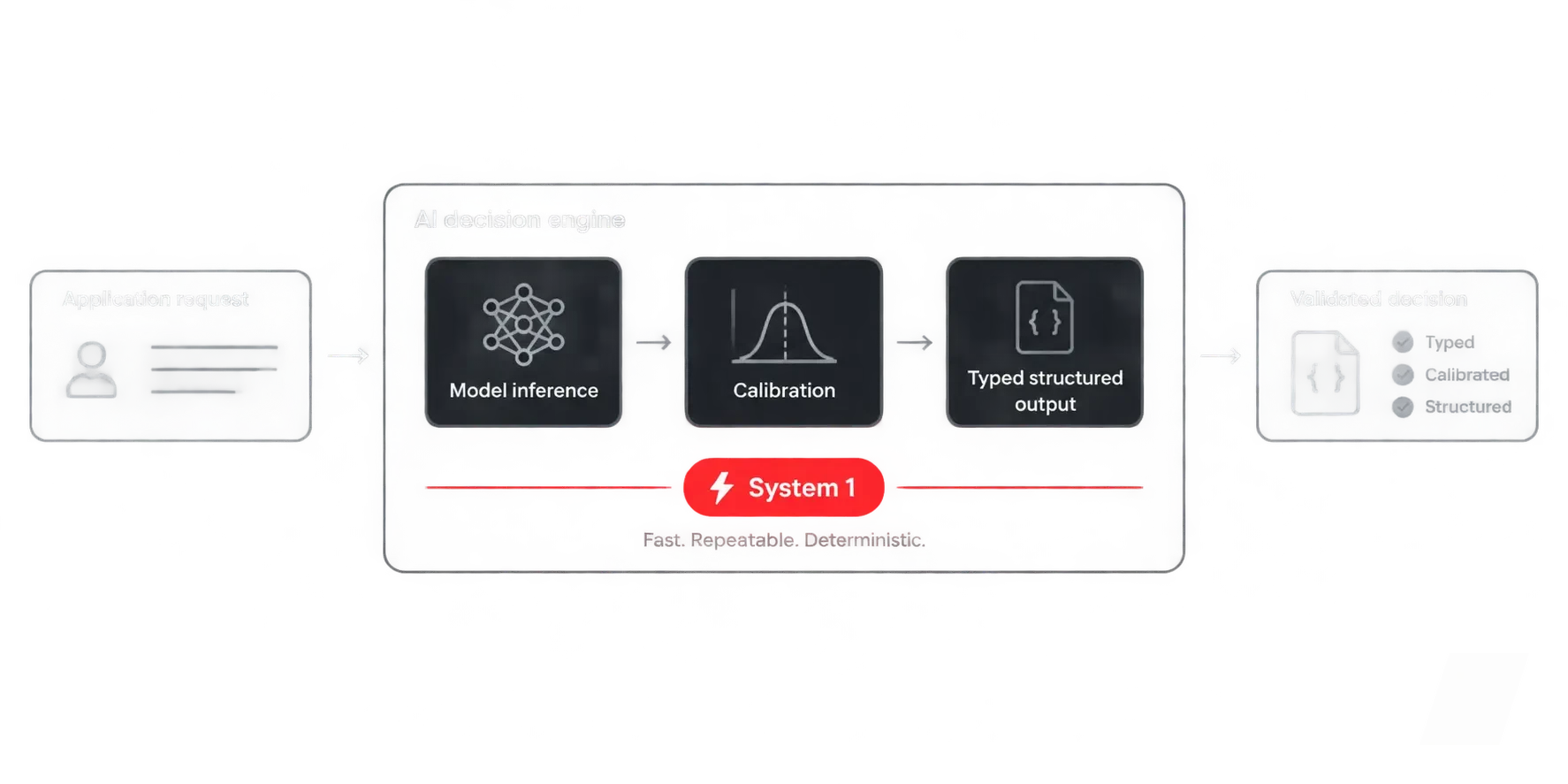
Pydantic is the package’s declared dependency, with a minimum version of 2.5.0. That matters because it gives Python developers a familiar foundation for defining the shape of a decision result rather than passing loosely structured dictionaries through the application.
A schema can make fields, types, and nesting explicit at the boundary where model output enters application code. Validation there narrows the gap between “the model returned something plausible” and “the rest of the system received an object it can safely process.” It also creates a clearer contract for branching, persistence, tests, and integration with code that already uses Python type annotations and Pydantic models.
That foundation is useful, but the dependency declaration does not by itself describe OpenJevPro’s complete behavior. Users should verify how schemas are supplied and applied, whether nested models and constrained fields behave as expected, and what happens when output is invalid. Error types, retry behavior, partial results, and serialization rules matter more in production than the presence of a validation library alone.
The practical evaluation is straightforward: define representative decision models, feed the engine valid, malformed, incomplete, and adversarial outputs, and inspect the resulting errors and objects. Check whether validation occurs at the intended boundary, whether failures are observable and actionable, and whether generated or returned data remains compatible with the application’s existing Pydantic conventions. OpenJevPro positions Pydantic as part of its typed-output foundation; its exact schema and failure semantics still need hands-on confirmation.
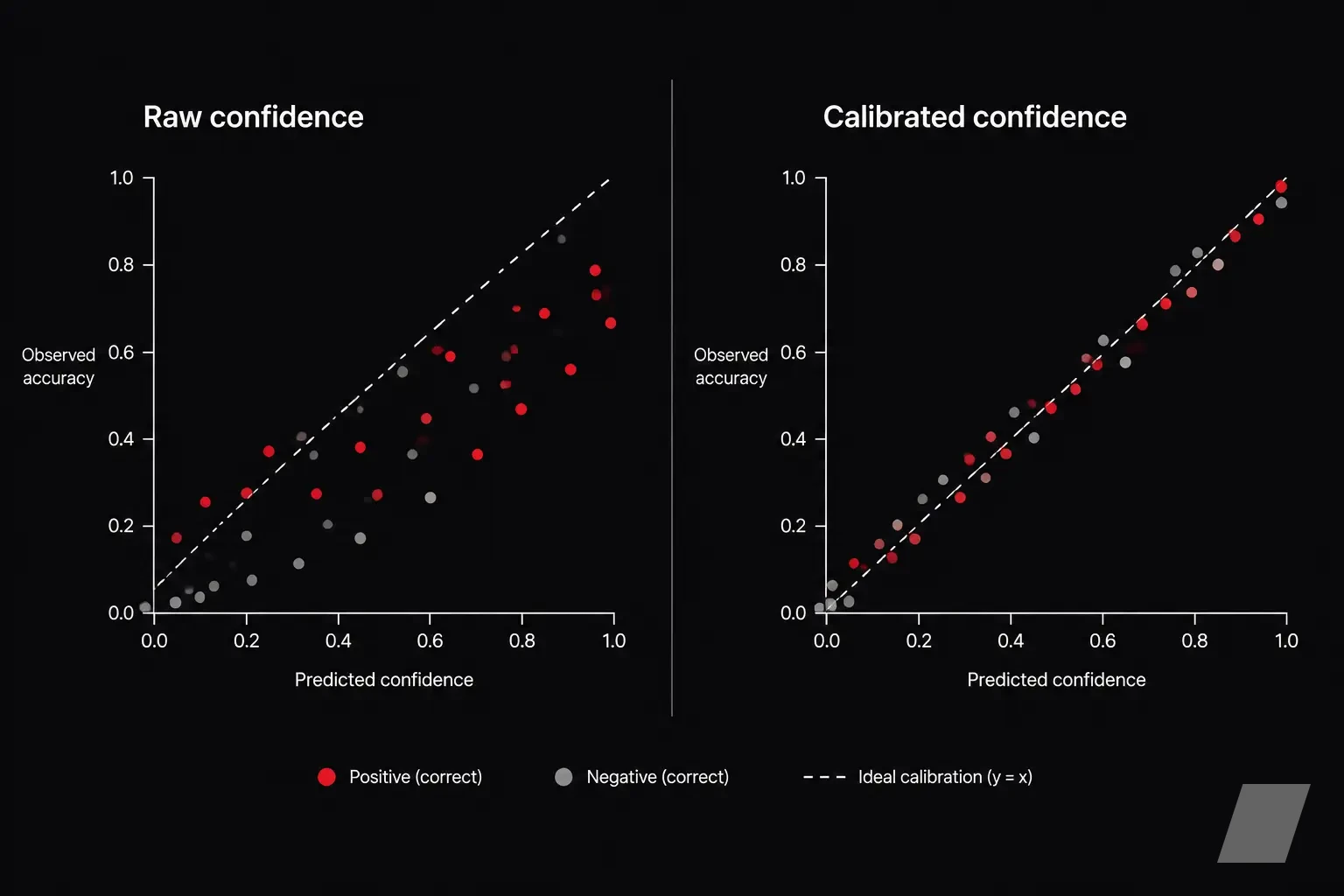
Calibration is what makes a confidence score operational. A model that labels a decision with 0.9 confidence is useful only if comparable decisions are correct roughly 90% of the time. Otherwise, the number is decoration—and potentially a dangerous input to automation.
A calibrated decision engine can support policies such as:
- Routing: send low-confidence cases to a stronger model or a human.
- Abstention: decline to act when evidence is insufficient.
- Ranking: prioritize decisions by expected reliability, not just raw scores.
- Automation: trigger downstream actions only above a threshold tied to observed outcomes.
Calibration also makes thresholds portable within a defined operating environment. Teams can measure error rates at confidence bands, choose acceptable risk levels, and monitor when model behavior drifts. It does not eliminate uncertainty; it exposes whether the uncertainty signal deserves trust.
OpenJevPro’s package metadata explicitly identifies calibration as a core concern. That establishes the intended problem space, not the implementation details. The package description does not, by itself, establish which calibration method it uses, whether calibration is task-specific, how it handles distribution shift, or what evaluation metrics it exposes. Those points require inspection and testing on representative workloads before confidence scores are used to gate production decisions.
Structured output is an engineering contract, not a formatting preference. A typed decision result gives downstream code a defined shape: branch on declared fields instead of parsing prose, log decisions consistently, and test behavior against explicit cases. It also gives observability systems stable dimensions for measuring outcomes, confidence, and failure rates.
That contract is only useful if it survives real model behavior. Evaluation should cover nested models, missing or extra fields, wrong types, malformed responses, and invalid values. Determine whether failures are rejected cleanly, retried, repaired, or silently coerced. Retries need their own limits and telemetry; otherwise a transient parsing problem can become latency or cost amplification.
Partial failures matter too. If one item in a batch is invalid, does the whole decision fail, or can valid results be retained with an explicit error for the rest? The output model must also fit application schemas rather than becoming a parallel representation that requires constant translation. Check serialization, versioning, and compatibility with existing Pydantic models and API boundaries.
A package can advertise structured output while leaving these operational details unspecified. They are the difference between a typed demo and a dependable decision interface.
OpenJevPro is presented as an open alternative to TypeSafe Jev, but “open” does not mean unrestricted. The package declares PolyForm Noncommercial 1.0.0, which is materially different from permissive licenses such as MIT or Apache-2.0. Commercial use may carry conditions or require separate permission, so teams should read the license text and get clarification before adopting it in a commercial product.
The project is published on PyPI, with a homepage, GitHub repository, and issue tracker available for inspection. Those surfaces make the code and reported problems easier to evaluate, but they do not by themselves establish production maturity, support guarantees, or a stable API. For v0.1.0, treat licensing and project activity as adoption criteria, not administrative details.
Use OpenJevPro when an application needs explicit decision schemas, confidence-aware handling, and a focused System 1 layer rather than another stream of untyped model text. The package’s v0.1.0 release is worth evaluating against a short checklist:
- Python
>=3.10and Pydantic>=2.5.0integration - Throughput under realistic concurrency and model latency
- Calibration quality on representative decisions
- Behavior for invalid structured outputs, retries, and partial failures
- Compatibility with existing Jev workflows and schemas
- PolyForm Noncommercial 1.0.0 licensing, especially for commercial use
The project publishes a homepage, GitHub repository, and issue tracker, but those surfaces do not by themselves establish production maturity. Validate schema behavior, failure handling, confidence quality, and operational performance with application-specific tests. OpenJevPro v0.1.0 is a promising package to investigate for typed AI decisions; it is not a substitute for production validation.